If you want to know how to choose 6.5 coaxial car speakers, the short answer is: make sure they fit first, then pick on sensitivity and honest power ratings, and only then worry about extras like tweeter material. The 6.5-inch round speaker is the most common door size in modern cars and trucks, which is good news, because it means there are lots of options and most of them drop straight into the factory opening. It also means it is easy to buy the wrong pair if you shop on watts alone.
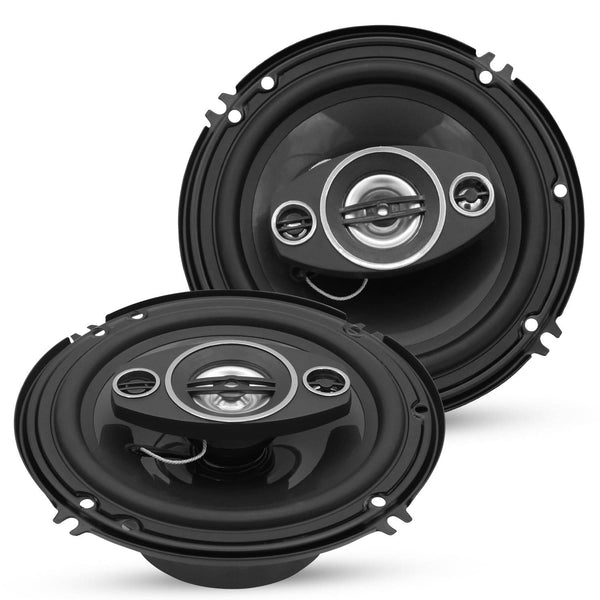
A coaxial speaker mounts the tweeter on a post in front of the woofer, so one speaker covers the whole range and uses the same two wires as the factory unit. There is no separate crossover to hide and no tweeter to mount on the dash. For a straight swap of tired paper factory cones, that is usually the simplest route with the least risk of rattles or broken clips.
"6.5" and "6" are often used for the same opening. A lot of speakers sold as 6" or 6.5" share a similar cutout, but frame size and screw holes vary, so treat the name as a starting point, not a guarantee.
Our car speaker size guide walks through each measurement in more detail.
Speaker boxes love big peak numbers. Peak (or "max") power is a short burst rating. RMS is the continuous figure and the one to compare. If you are keeping the factory radio, you only have modest power per channel, so a very high RMS rating does not help you; the speaker simply will not get that much. If you plan to add an amplifier later, match the speaker's RMS rating to what that amp actually delivers per channel.
Sensitivity (in dB, measured at 1 watt and 1 meter) tells you how loud a speaker plays with a given amount of power. On a stock head unit, a more sensitive speaker will sound louder and livelier than a less sensitive one with a bigger watt number. When you compare two listings, look for this figure first.
Most factory and aftermarket car radios expect 4-ohm speakers. Stick with 4 ohms unless you know your system is designed for something else. Mixing impedances on one channel can make the radio run hot or sound uneven.
A 2-way coaxial has a woofer and a tweeter. 3-way and 4-way designs add small extra drivers. More drivers does not automatically mean better sound; a well-made 2-way often sounds just as clear. Pick based on fit and sensitivity, then treat the driver count as a tie-breaker.
New coaxials usually bring clearer vocals and cleaner highs than worn factory cones. What they will not do is produce subwoofer-level bass from a door. If you want more low end, pair the doors with a small subwoofer, such as a shallow-mount model under a truck seat (see our shallow mount subwoofer guide).
Evoxen USA sells 5 Core coaxials only. For 6"/6.5" openings, see the 5 Core 6" 2-way coaxial door speakers. If your doors take a smaller size, the 5 Core 4" 2-way coaxial speakers cover many dash and compact-car locations, and for oval rear decks there are the 5 Core 6x9 4-way coaxial speakers. Not sure which size you have? Read 6x9 vs 6.5 car speakers or the factory speaker upgrade guide.
Often, but not always. Compare the listed cutout diameter and depth with your measurements before ordering.
No. Coaxials run fine from a factory radio. An amp adds headroom if you like it loud.
Check polarity first, then make sure the speaker is sealed against the door with no air leak around the frame.
Front doors make the biggest difference because that is where you hear from. Rears can come later.